Thursday, August 31, 2006

Hanging out at Garibaldi Lake


I was fortunate to have the opportunity to perch myself up on a rock along the edge of spectacular Garibaldi Lake, about half-way between Squamish and Whistler, British Columbia. After an exhilarating 9km hike climbing from 500m to 1450m above sea level, you reach the Lake and get treated to one of the most spectacular natural settings on earth.

more photos

Resist the temptation to stretch your brand

Informative article by Ted Matthews in Canadian Business Online, who describes the pitfalls of getting away from your core business and brand, and launching into sister ventures that seem appealing but only prove to be a costly lesson in poor judgment. The guidelines you instinctively use to make yourself the best in your business - core purpose, clear and single-minded vision, market position - get stretched when trying to apply them to a new venture where the current competition is better. Ted provides a case in point:

For Cam Heaps, president of Steam Whistle Brewing, a Toronto-based microbrewer, this insight came the hard way. Recently asked for the best lesson he had learned from his family's earlier venture with Upper Canada Brewing Co., Heaps answered: "Do one type of beer, one brand, and do it well." He was referring to Upper Canada's brand-extension mistake of trying to drive sales by coming out with new beers, new names and new campaigns on a regular basis. Heaps and his team lost focus on their original product, and missed opportunities to reinforce it, because new product launches meant constantly having to start anew at every level and discipline of the firm. Their loss of focus ultimately led to Upper Canada's 1998 sale to rival Sleeman Breweries Ltd. of Guelph, Ontario.

read more

Wednesday, August 30, 2006

Why marketing should make the user manuals!


Lance Tracey shared this great post with me from Kathy Sierra on the Headrush Blog. She asks a very good question... why do so many companies treat potential users so much better than existing users? So much time and effort is put in to designing slick glossy brochures to attract new users, while product manuals are treated as a painful afterthought - usually black and white printing on low-grade stock. Yet, product manuals are to be used by existing users who have bought from you. You would think they would matter most and the information they need from you would be packaged accordingly. But in almost all cases, it isn't. And we wonder why users don't read the f***ing manual! I'm guilty of it myself. There is such a natural tendency by business operators and marketers to entice and capture new customers, rather than focus on their captive mass. I think 'hunting' seems sexier than 'cultivating' so we align our marketing resources as such. What would happen if it were the other way around and we placed more emphasis on our current users and treated them the same or better, not worse. You could turn them in to a highly effective viral marketing channel by engaging and helping them to become as passionate about your product as you are. You'll get the new users as a result.

So put your money where your users are if you're in it for the long haul and develop kickass support material. This isn't the place to cut corners. And as Kathy suggests, make your manuals so good and informative that they could also be used as sales brochures.

read more

Practical tips for executives for balanced living

Azim Jamal is a very passionate motivational speaker and best-selling author who absolutely loves what he does. Discovering what he is passionate about came during a soul-stirring experience while volunteering in the developing world. Overcome by the plight of homeless refugees in war-torn areas of the world, he vowed to make a difference in people's lives. He made his life-changing career from "accounting for business" to "accounting for life".

When I first saw him in action at an event, I was floored. You couldn't help but be captured by his enthusiasm and passion - almost evangelical, but in a good way. We've since become good friends and I always enjoy his views on living life to the fullest and tapping in to your full potential. He has put together some practical tips for balanced living from his book 7 Steps to Lasting Happiness we can all use in our busy lives. These include:

  • Preparing a family mission statement with all members

  • Eat with your family once a day, use a weekly time budget

  • Do the 20:20:20 (20 min meditation, 20 min exercise and 20 min reading) in the early morning and tackle the big stuff first

  • Prepare a weekly time budget of where you want to spend your time


  • read more

    Tuesday, August 29, 2006

    Evil marketing? What a buffalo rancher taught me about selling


    A neat little story provided by Dr. Joe Vitale of his encounter with a buffalo rancher who loved his product but "hated marketing". What the rancher didn't realize was that he was marketing effectively all along while he talked about his product that he was so passionate about. So much so, the doctor end up purchasing meat, jerky, and a notebook from the guy.

    Dr. Joe Vitale accurately states, “Marketing is simply engagingly informing the people most likely to be interested in your product or service that it’s available.” It’s not about manipulation, but information. The more passionately and sincerely you convey your information, the more hypnotic your marketing will be.

    read more

    Monday, August 28, 2006

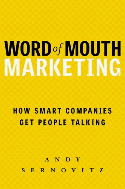
    Guy Kawasaki's Book Preview: Word of Mouth Marketing


    Guy Kawasaki posted a preview on his blog of a book by Andy Sernovitz called Word of Mouth Marketing: How Smart Companies get People Talking. He shares 10 tidbits from the book on how to generate greater word of mouth. It sounds like an excellent book and one I can't wait to get my hands on. One point Guy Kawasaki shares that I really liked is how companies could hire a customer service rep to search the Internet for kudos and complaints. When the rep finds kudos, he should thank the person. When the rep finds complaints, he should get it fixed. What a simple idea to implement and yet very effective in generating genuine word of mouth.

    read more

    Pontiac goes with Internet-Only advertising


    Digiknow blogged about this article that appeared in Advertising Age regarding Pontiac who will be adopting an Internet-only advertising campaign for their new sporty G5 coupe. Although adopting such a campaign will not generate the same general brand awareness as television, they feel the Internet will let them target their specific audience of young men who are in the market for a car and are likely to find the G5 appealing. This transition to an Internet-only campaign also means a reduction in advertising spend as compared to more traditional mass media because of the net's incredible ability to focus spend and campaigns. Also, it's cheaper. The article also talks about a general movement by carmakers to spend less on campaigns that try to convert owners of competing cars, to retaining current customers longer and keeping them loyal to the brand. This strategy places more emphasis on target marketing and CRM.

    read more

    Saturday, August 26, 2006

    Essence of Branding

    A well written article by Nick Rice who shares how branding is happening whether you are driving it or not. Every interaction with your company creates an impression in that person. He defines brand as the gut feeling of those people that has been exposed to your company and/or products and services. Since you cannot control individual gut feelings, you cannot control your brand. You can, however, influence it. I agree with Nick. So often people mistaken a logo design as branding, rather than just one element that represents a brand. To make a brand effective, businesses need to define what their brand stands for, what their value proposition is and what beliefs they would like the marketplace to have of their brand. Then, they need to stay consistent with those beliefs by living their brand in everything they do.

    read more

    Thursday, August 24, 2006

    Blogging for Big Dollars

    Excellent article that appeared in Business 2.0 on the explosion in blogging and the ad revenue that is being generated by 1-person operations, including Fark.com and Techcrunch.com. Any person who is running a business, has an interest or hobbie they like talking about should pay attention - there is some serious cash being made.

    read more | digg story

    Top Gun Tom's brand is fading fast

    What happened? Here's an actor who has spent the better part of 20 years building a strong, cool and recognizable brand we all know as "Tom Cruise". An A-list movie star who has enjoyed a fairly equal following amongst male and female movie-goers. Men could like him because he seemed cool, women loved him for everything else. His aloofness and camera-shy approach to interviews made his brand even more appealing, if not mysterious. It let his fans mistaken him for the heroic characters he played on screen. This appeal over the years has translated in to billions of dollars in box office receipts for Paramount Pictures from hits including "Top Gun," "Mission Impossible" and "Days of Thunder." It has also made Tom a very rich man.

    This week, in the latest bizarre chapter of Tom Cruise, Sumner Redstone, head of Viacom, the parent company of Paramount, ended its 14-year relationship with Tom's production company, Cruise/Wagner Productions. According to The Wall Street Journal, Redstone cited Tom's controversial conduct and behavior over the last year as the reason for the split.

    Redstone reportedly believed Tom's antics -- including his now infamous appearances on "Oprah" and "Today" -- had a negative impact on the bottom line for "Mission Impossible III." Redstone said, "As much as we like him personally, we thought it was wrong to renew his deal." Redstone told The Wall Street Journal: "His recent conduct has not been acceptable to Paramount."

    It's safe to say that Paramount feels the Tom Cruise brand has been irreparably damaged and will never have the box office appeal it once did. A cool brand that is fading in to "Wacko Jacko" territory. His bizarre behavior on Oprah was the tipping point as it exposed him as someone his fans did not wan to see - a nerd. Even a little creepy. And so the Tom Cruise brand has spiraled downward ever since. A lot can be learned from Tom in how to manage or mismanage your brand. It is so vital to stay true and consistent with what your customers believe your brand stands for. Reinforcing these beliefs rather than compromising them is key to a healthy brand and longevity.

    Now I have to admit, I really enjoyed "Mission Impossible III." I thought it was the best one of the franchise by far. And I remember coming out of it thinking, "Tom is still a good actor." But seeing Tom lose his cool over the past year, made him no longer cool on screen and that has forever changed the way I view Tom Cruise.

    Wednesday, August 23, 2006

    Logo Design For Effective Branding

    Some simple tips when approaching the question of how to design an effective logo. How memorable is your business? It might be your service, your products, or most importantly your company branding.The elements that go into your company's logo has a significant effect on how successful your business will be in bringing customers in and keeping them coming back.

    read more | digg story

    Technorati Profile

    Tuesday, August 22, 2006

    YouTube's Ad Model Lets Users Vote on Ads


    Keeping in the spirit of user controlled content, Youtube.com will now allow users to vote up or down video ads that appear on its home page. This article appeared on Advertising Age.

    How will YouTube retain its new-found fame when the time comes to turn a profit? That question -- one of the most bandied about by marketers today -- was partly answered today when the video-sharing startup unveiled a new ad strategy called participatory video ads.

    Here's how it works: YouTube will feature video ads on its home page that members of the community can vote up or down, rate, comment on and list as their favorites. The ads can also be shared and embedded into a user's own video creations. The strategy is marketing jujitsu, as it pulls consumers into messages by giving them complete control over them.

    Read more

    Monitoring Competitor Changes and Collecting Business Intelligence Data

    CodeMonitor™ is a FREE software product that allows you to track your competitors changes to their web site. It lets you collect competitive intelligence data virtually and in the absence of trackable RSS feeds.

    read more | digg story

    Monday, August 21, 2006

    "Snakes on a Plane" tops box office in North America using online buzz


    The new movie "Snakes on a Plane" slithered to the top of the box office in North America this weekend, bringing in about 15.3 million dollars after months of Internet buzz and aggressive marketing for the movie about killer snakes on a plane. The approach of focusing first on hyping the movie online rather than traditional tv, radio, print, and billboards will forever change the way movies are marketed.

    read more | digg story

    10 steps to building your web presence

    A 10-step article that covers some of the most common mistakes when designing and developing a business web site. I like how it touches on the importance of the home page which should be highly functional rather than just a beautiful front cover. I like to use the analogy that a home page should be designed in the same manner as the front page of a newspaper. With a newspaper, readers can quickly glance and find the most relevant stories to them and where they are located in the paper. Similarily, a home page should share the same functionality and let the user get to the information they want fast and easy.

    read more | digg story

    3 Important Elements of SEO, 4 That are Absolutely Essential

    Search engine optimization or SEO, is a method of optimizing your web site so that it appears higher in Google and other search engines when a user types in a keyword that is relevant to your business. If your listing appears in the top ten under a specific search, you greatly increase the traffic clicking through to your site. There are many firms that offer full-scale SEO services, but there are some things you can do yourself to optimize your site. Here is a helpful article on some SEO essentials you can do.

    read more | digg story

    Saturday, August 19, 2006

    PPC marketing checklist

    A free checklist that reviews how to prepare, launch and measure a pay per click marketing campaign.The beauty of online marketing compared to more traditional forms of marketing is that it is completely measurable. The metrics you get from a PPC strategy allow you to be more strategic in who you target and test the creative and message of your ads to see which generate the most impact.

    read more | digg story

    Thursday, August 17, 2006

    Low carb ways to stand out at trade shows


    Imagine you are a newly launched box of cereal, made from whole grains and fortified to the rim with vitamins, iron and protein. You are low in sodium, low in sugar, low in carbs, yet very high in taste. In fact, no other cereal offers quite the same healthy mix you do to kick-start the morning. Now you’re ready to go big-time. You have negotiated your spot in a mile-long aisle at one of the nation’s best-known supermarket chains. Soon you’ll be rubbing elbows with the likes of Corn Flakes, Shreddies and Honey Nut Cheerios – industry heavyweights that aren’t exactly dipping into their lucky charms for fear of losing ground to you. Oh, they have seen your type before a fresh new kid-on-the-block with promises of milky grandeur only to find out that shoppers are just passing by without showing a single ounce of interest. The reason? The new kid didn’t know how to work the aisle to call attention to his great tasting granola. Now they expect you to follow a similar fate. What will you do differently?

    Companies preparing for a trade show find themselves asking the same question. How can they stand out and attract interest amongst the hundreds of exhibitors and competitors occupying the same real estate? The answer lies in four areas:

    1. Pre-show planning and promotion
    2. Exhibit design and collateral material
    3. At-show boothmanship
    4. Post-show follow up

    Pre-Show Planning and Promotion
    Preparation and proper planning is the blueprint to trade show success. Without it, you can expect the three d’s: disappointment (in your results), disinterest (in working the show) and disservice (to yourself). Once you have established your objective, prepared a budget and chosen a show, decide how you are going to drive traffic to your booth. Pre-show promotion techniques such as direct mail, targeted faxes and emails, the Internet, sponsorship, targeted advertising, and press releases are popular mediums used to let prospects and clients know about your show participation. Recent studies show that most attendees, 50 to 75%, pre-plan which exhibits they are going to visit at a show. In effect, pre-show promotion can greatly increase the number of qualified visitors to your booth by generating interest before the show even begins.

    Exhibit Design and Collateral Material
    Next comes the all-important, but often ignored, area of exhibit design. As the box of cereal sits anxiously awaiting the attention of a shopper, so does an exhibitor without a powerful backdrop to stop attendees in their tracks. At this stage, a well-designed exhibit that delivers your message and creates a memorable impression is required. If you can’t stop them, you can’t qualify them. And all the money you spent on booth space, staff, travel expenses and accommodations goes out the door, leaving you withnothing to show for it. About five seconds is the average time it takes for an attendee to pass by a ten-foot booth space. This doesn’t give you much time to work with. Not only that, consider all the visual distractions around you: crowds, seminars, product demos, entertainment. There are enough things happening at a trade show to overshadow your presence on the show floor.

    At-Show Boothmanship
    Learning the art of engaging and disengaging attendees can help you manage your time wisely on the show floor. With so many potential customers floating around, you don’t have time to waste attending to “looky-loos” or “chatterboxes”. Instead, qualify attendees with a few thoughtful questions to help you determine if they would be a potential customer for your products and/or services. If you decide they are, begin to qualify their interest further, listening attentively and recording the information on a lead sheet. Ensure you record a rating of some sort to indicate if the lead is “hot”, “warm” or “long-term”. This will help you prioritize your follow up calls after the show. In general, you shouldn’t spend more than five minutes with a qualified attendee – you may end up ignoring other potential prospects in your booth. If you feel you need to spend more time with a prospect, you can either agree to meet them at another location for coffee to further discuss their needs. Or, if you have a meeting area designed into your exhibit, you can continue in there. Just make sure there is enough staff to cover your area and engage attendees.

    Post-Show Follow Up
    Once the show is over, collect your leads, prioritize them according to the assigned rating and store them in a safe place for immediate follow up when you return back to the office. It is strongly suggested you make one initial contact with your leads within two working days (and no more than five) after a show. This could be accomplished by a simple email (if provided by the attendee) or postcard. In it, you can thank them for visiting your booth and let them know your next action i.e. you will be mailing them a complete brochure package and then following up with a phone call. Effective post-show follow up can mean the difference between a warm lead or a lucrative sale.

    Word-of-mouth and the best coffee in town

    Every business I come in contact with and ask them where do they get the majority of their new business from, ineveitably they say "word-of-mouth". If you are one that actively records where your leads come from, I'm sure it would support this claim. In fact, from my dealings I have found that on average, 60-75% of new business can be attributed to WoM and customer referrals. Sometimes much higher.

    It is the cheapest form of marketing and one that can be harnessed by delivering the customer a better solution or service than the next competitor. I'll do a little shout out here for a coffee shop that I think is the best one in Vancouver - hands down. Almost every morning I visit a cafe on my way to work and "no!" - it's not that one with the green mermaid from the Emerald City. The place is called Prado located on Commercial Drive in Vancouver. They serve coffee and espresso using organic fair-trade beans from 49th Parallel Roasters in a cafe with minimalistic decor, free wi-fi, and friendly service. That's all great, but why do I like them? Because their coffee is damn good! Effective WoM always starts with a great product. The free wi-fi, the trendy white walls, smiling faces, globally-conscious beans are all great add-ons. Together, they compliment the core product (tasty coffee) to deliver a greater experience to the customer (me). The combination makes me want to rave about them, as I've done here (sometimes reluctantly so that I don't have to face any ridiculous line ups from too much boosting). There is nothing like third-party endorsements to warm potential customers up to your business.

    If you are in the early stages of your marketing and have a limited budget, focus first and foremost on how you can get new business through WoM. An excellent product with complimentary services that your customers value is a great start. If you're not sure what those services should be, ask your customers... they will give you all the ideas you need and in turn, rave about them to others.

    Marketing Today Blog: Disintegrated Marketing

    Comments on Maketing Today Blog regarding the lack of integration between online and other mediums such as televsion and radio by well-known companies like The Gap.

    Click here to read post

    $100 laptops to debut with Thai kids


    Amazing product that will ensure everyone around the world owns a laptop. I found this on cnn.com. To read the original article click here.

    (AP) -- The ambitious project to provide low-cost laptop computers to poor children around the world is about to take a small step forward.

    More than 500 children in Thailand are expected to receive the machines in October and November for quality testing and debugging.

    The One Laptop Per Child program, which began at the Massachusetts Institute of Technology's Media Lab and now is a separate nonprofit organization, hopes to deploy 5 million to 7 million machines in Thailand, Nigeria, Brazil and Argentina in 2007.

    Thailand's government is expected to buy 1 million in the first year.

    But Prime Minister Thaksin Shinawatra announced in a nationwide radio broadcast that "if this project is completed" it would reach all Thai elementary students. He said each student would get a free computer "instead of books, because books will be found and can be read on computers."

    The creator of the laptop program, Nicholas Negroponte, has set a goal of making the laptops for about $100 each, though he expects the initial figure to be slightly higher and the long-term cost slightly lower.

    The machines will use the free Linux operating system, include flash memory instead of a hard drive and run on electricity created by a hand or foot pump.

    China and Egypt have also expressed interest, but at least one country initially expected to take part, India, has decided not to be in the first round.

    Walter Bender, a Media Lab founder who serves as One Laptop Per Child's president of software and content, said the organization still is talking with Indian officials and non-governmental agencies.

    "While India will not be part of the year-one launch, with 25 percent of the world's children, it is within our mission to work with India down the road," Bender said in an e-mail this week.

    The importance of targeting in email marketing

    Many businesses seem to believe that email marketing is the way to go. It does have a lot of merits with regards to target marketing and ease of use, but it is very important to understand the whole concept of "permission-based" marketing. It's quite simple, if you do not get permission from the email recipient to receive promotional/newsletter emails from you, than it is considered spam and you can be blacklisted. You can get permission from a recipient by allowing them to "subscribe" to your e-newsletter through your web site, or have them checkmark "yes" to receiving promo emails from you when filling out an online form. In face-to-face settings such as tradeshows or conferences, you can have a similar hard copy form. A properly implemented permission-based email marketing program must allow the recipient to "opt-out" at any time. The article below appeared on e-consultancy.com and talks about the damage of abusing the email channel.


    The importance of targeting in email marketing

    Email marketing has been a revolution. Not only can it be timed and targeted to perfection, it is cheaper than most other forms of direct marketing, making it accessible to many more companies.

    However, from regularly speaking to people in the industry, and looking at my own inbox, many companies are not taking the same care with their email direct marketing as they would offline. This is causing problems for the industry and the companies themselves.

    A recent report by SoftScan announced that 90% of the emails they scanned in July were spam, the average throughout the year being 85%.

    This is a lot of spam. However a survey from Return Path found that more than a third of people labelled emails as junk or spam, even though they had actually signed up for it.

    Do companies not realise that if they are wrongly labelled as spammers, they may be blacklisted by ISPs?

    Why is it that many companies still seem to think that if they send out millions of untargeted emails - instead of thousands of targeted ones - they will get a better response rate?

    This may be true for some industries in the short term, but such an approach can do irreparable damage to a company's brand in the long term, with consumers learning to ignore emails they recognise as irrelevant.

    We try to encourage companies to always put their customers first and ensure that what they send is timely and relevant. This may mean that we make less money because we are encouraging them to send lower volume of emails, but not spamming your customers can only be good for your long term relationship with them.

    Just because email is cheaper than most other marketing vehicles, it needs to be treated with as much care and attention to detail as you would give to your other methods of direct marketing.

    Google's Questionable Clicks

    I found this article on Forbes.com. Interesting since online advertising is a billion dollar industry and only growing.

    Google's Questionable Clicks
    Rachel Rosmarin 08.10.06, 3:30 PM ET

    San Jose, Calif. -

    After wining, dining, dancing and karaoke-ing at the "Google Dance" inside the search company's Mountain View, Calif., headquarters Tuesday night, 2,000 online advertising strategists came face to face with Google's Chief Executive Eric Schmidt Wednesday morning, and he wasn't nearly as much fun.

    On stage at the Search Engine Strategies conference, he wouldn't even answer one of their most basic, burning questions: How much click fraud happens within Google's advertising system?

    "We don't want to give out the details," Schmidt said. "But we believe we have it under control, and we believe it is getting better. Though, we don't know what we don't know--we only know what we can detect."

    Schmidt's wishy-washy claim comes at a time when his company and third-party click fraud detection firms are sparring over the prevalence and method of tracking the bogus clicks, which occur either when competitors automatically or manually click on each others' ads to waste marketing budgets, or click their own ads to get extra cash from search engines.

    Although Google shows individual advertisers limited false-click data for each ad campaign, the company refuses to disclose an industry average, or total dollars spent on bad clicks. Third-party auditors often estimate averages and use tracking technology not employed by search engines to measure clicks and where they come from. Advertisers then try to use reports generated by these auditors to get refunds or credits from Google and other search engine ad networks.

    On Tuesday, Google's click quality team published a report dismissing the click fraud estimates of three third-party software companies. "Firms [are] stating that their measurements show much higher levels of click fraud than we believe could possibly be realistic (e.g., 14%), which is troubling," according to Google's report.

    This month, click-fraud auditing companies have put the range of false clicks at between 8% and 35%. One firm, Outsell, estimated that about 15% of clicks are fraudulent, and that they cost U.S.-based search engines and advertisers about $1.3 billion a year. Google's opinion of Outsell? "It was an opinion survey," according to the Google report.

    As recently as Aug. 3, Google, Yahoo!, Microsoft and IAC/InterActiveCorp's Ask.com committed to work with the Interactive Advertising Bureau to write click-fraud prevention guidelines, as well as to create standards for how to identify click fraud and how to define a "click." That announcement came on the heels of a judge's approval last month of a $90 million settlement of a click fraud lawsuit. Jim Spanfeller, chief executive of Forbes.com, is the chairman of the IAB's executive committee.

    But Google's words and actions indicate that public transparency on the click fraud issue is not a top priority, regardless of how committed the company says it is to solving the problem.

    "With nearly half a million advertiser accounts, if anyone is in a position to have a statistical guess, you'd think it'd be Google," says Scott Brinker, CTO of Ion Interactive, a firm that measures click fraud by tracking behaviors after a click. But since Google doesn't share its data, it is frighteningly difficult to come up with a number, he says.

    "There are going to be patterns of click fraud detected only on their end and only on our end," he says. "The ideal would be for search engines and third parties to cooperate and look at a combination of the data."

    Jon Waterman, chief executive of online marketing firm Findology, which on Tuesday launched click-fraud detection software Fraud ID, says he doesn't blame Google for retaliating against third-party auditors in its report.

    "There's no need to bash people in this business, but I want an open forum," Waterman says. "Discredit our data, and we'll respond in real time. I'm sure that can only help address this industry's problem."

    Friday, August 11, 2006

    Presenting with PowerPoint: 10 dos and don'ts

    Nearly every business meeting I attend, the presenter inevitably pulls out (oh no!) their Powerpoint presentation. Now let me tell you - having sit through thousands of Powerpoint slides over the years, one thing is for certain - using Powerpoint and knowing how to use Powerpoint are two very different things. Here is a helpful article by Jeff Wuorio that appears at microsoft.com. It provides 10 do's and don'ts. Pay attention, please!


    Presenting with PowerPoint: 10 dos and don'ts

    Cherie Kerr knows how PowerPoint can be both provocative and persuasive in a business meeting. She's also aware that precisely the opposite can occur.

    "It can be the very best friend you have," says the Santa Ana, Calif., public relations consultant. "But you have to use it right."

    Kerr's two-sided view of Microsoft's popular presentation and graphics program mirrors a debate coursing through business and academia. While many embrace the values of PowerPoint as a potent business tool, there are others who contend that it's a drag on effective interaction — that it confuses, distorts and even strangles communication.

    Read full article here

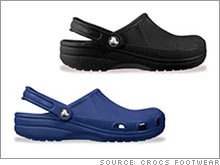
    Crocs' ugly shoes score a pretty payday


    Interesting article regarding the Croc's craze - those shoes you see grown men wearing and just can't understand why. I found this on money.cnn.com


    Crocs' ugly shoes score a pretty payday
    They're the hottest thing to hit the streets this season, but will the company still be standing after the fad fades?

    Crocs, the colorful resin clogs, are the biggest footwear fad since Ugg boots, and equally as ugly. But will they be able to sustain the same long-term success that Uggs' homely sheepskin designs have enjoyed?

    Crocs Inc. (Charts) started just four years ago when three Boulder, Colo.-based founders decided to market a shoe developed and manufactured by Foam Creations, Inc.

    The chunky shoes, which cost about $30 a pair, are made with a proprietary resin which softens as it warms, and molds to the wearer's foot - making them surprisingly comfortable.

    Read full article here

    Thursday, August 10, 2006

    Oh, no! The dratted telemarketers are back!

    Funny article on telemarketing. I found this on theprairiestar.com


    Ring, ring. The telephone rings.

    Oh, joy. What happy tidings will this call bring? A long-vanished friend phoning after a 20-year silence? News that Uncle Moneybags has croaked and left his entire $400-billion fortune to you alone?

    All breathless and sweaty from running down the hall from the bathroom, you grab the receiver. “Heelloo.”

    There’s a long crackling click and somebody comes on the line, talking so fast you can barely make out the words.

    “This is soandsoandsoandsoandso with umpty-umpty-ump. Howareyoutoday?”

    Read full article here

    SES 2006: Pimp That Site!

    I found this article on webpronews.com about how sites can benefit from some good fashion sense.


    Most sites could benefit from a little nip and tuck, and when that can increase their search engine visibility from nil to above-the-fold in the SERPs, the impact on a site can be dramatic. Staff writer Doug Caverly of WebProNews filed this exclusive look at the SES 2006 San Jose session, Pimp My Site!

    Doug also had some observations about the fashion sensibilities of the presenters. Said Doug (edited for clarity and a handful of colorfully creative metaphors):

    "Herrera is wearing a fuzzy, bright orange jacket and hat with white tiger-type accents. Also some dollar-sign glasses with the price tag fluttering around. Friesen is wearing a similar outfit, but his is purple instead of orange, and somehow that's less offensive. Lloyd-Martin and Osmeloski are wearing relatively "normal" dresses with the white-and-black tiger-pattern streaks of color. Li and Laycock are dressed sanely. Bless them."

    Read full article here

    Marketing to the MySpace Generation (and the Economics of Social Networking), Part 1 of 2

    Interesting article regarding marketing to the MySpace generation. I found it on marketingprofs.com

    The growth of MySpace has been front and center in the media over the past 12 months, in part because of the continued incredible growth of the venture but also because of social outrage generated by those who view it as an inappropriate and unsafe environment for teenagers. Here, Cliff looks at what has happened with MySpace, what has changed, and what he's learned about the online social networking business model over the past 12 months.

    Read full article here

    Wednesday, August 09, 2006

    Are You a Candidate for 'Stressed-out' Marketing?

    I found this article on marketingprofs.com


    It is the beginning of the fiscal year, and the marketing budget is fully funded. Giddy with delight, you begin diligently signing contracts and distributing spend for marketing investments throughout the year. But pretty soon, you begin to get the funny feeling that something—perhaps the cost-cutting chainsaw—is in the offing. Your worst fears are confirmed when, four months later, the CFO knocks on the office door and mentions the marketing budget has just been cut by 70%. Suddenly, you are a candidate for "stressed out" marketing.

    Read full article here

    Display ads lift Search conversion rates, says research

    I found this on e-consultancy


    Research by the Atlas Institute shows that the conversion rate from Search advertising is 22% better when used in conjunction with Display advertising.

    The study demonstrates that there is a quantifiable "synergy" between these two channels and will hopefully encourage advertisers to take a more integrated approach to their online marketing.

    The research is welcome because there are still companies out there who are shifting their budgets from display advertising into Search without a full understanding of how this might affect their conversion success or long term prospects.

    Read full article here

    Why asking 'why' is never a silly question

    Interesting article on e-consultancy


    So I am now officially a blogger. Indeed, I am an expert blogger. At this point, I’d like to forget that ex- means ‘has been’ and ‘spurt’ is a ‘drip under pressure’. But back to the point, once again my capacity for inaccurate prediction has struck gold.

    In my mind, blogging was always for other people – people with nothing better to do than fill the ether with their ramblings. Not for people like me with valuable contributions to make to the digital world. And yet here I am blogging away (on a late train home from work, in fact).

    Real full article here